
Norikae Meaning: のりかえ (乗り換え / 乗換) = Transfer on Japanese Train Signs
のりかえ (乗り換え / 乗換, norikae) = transfer: you can change to another line here.
See のりかえ under a station name? It is not another station. It means a transfer: if a line name is next to it, you can change to that line at this station.
Can't find the way? Ask: すみません、のりかえは どこですか? (Sumimasen, norikae wa doko desu ka?) = Excuse me, where do I transfer?

Aya is an AI guide character with an AI voice. Credits are at the end.
At a glance
| Japanese | Reading | Meaning |
|---|---|---|
| のりかえ / 乗り換え / 乗換 | norikae | transfer (all three are the same word) |
| 乗り換える | のりかえる (norikaeru) | to change trains or lines |
| 乗換口 | のりかえぐち (norikae-guchi) | transfer gate |
| 連絡改札口 | れんらくかいさつぐち (renraku kaisatsu-guchi) | connecting ticket gate (for example, between two railway companies) |
| 出口 | でぐち (deguchi) | exit (some transfers do take you out of the gates: then follow the signs for your next line) |
What のりかえ means
- 乗 = ride, and 換 = change. のりかえ is "changing what you ride".
- Many signs in Nagoya also say "Transfer" in English. The Japanese helps when there is no English, and when you ask someone.
Example in Nagoya: Sakae Station
On the Meijo Line platform at Sakae, the station name sign says のりかえ Transfer and Higashiyama Line (東山線). It means you can change to the Higashiyama Line here.
- Follow the transfer signs with the color and letter of the line you want: Higashiyama Line = yellow H, Meijo Line = purple M.
- At Sakae, stairs connect the Higashiyama Line platform and the Meijo Line platforms, so you stay inside the ticket gates.
- Elevators too: EV.1 for the Meijo Line platform toward Kanayama, EV.5 for the platform toward Nagoya Castle (Nagoyajo).
Other stations can be different: at some, you walk through a longer passage. Keep following the signs for your line. Going from Nagoya Station to Nagoya Castle? That route changes at Sakae: Nagoya Station to Nagoya Castle by Subway.
Changing to another railway company
Some stations have a special gate between two companies: 連絡改札口 (renraku kaisatsu-guchi). For example, Kintetsu's Nagoya Station map shows a JR連絡改札口 (to JR) and a 名鉄連絡改札口 (to Meitetsu). Not every station has one. If your ticket or card doesn't open the gate, go to the staffed window and show it. Map of Nagoya Station's lines and exits: Nagoya Station Map & Exits: JR, Meitetsu & Subway Transfers.
If you get lost
Show the line you want (for example, the purple M mark, or this page) and ask the staff or a person nearby:
すみません、のりかえは どこですか? (Sumimasen, norikae wa doko desu ka?) = Excuse me, where do I transfer?
To name the line: すみません、めいじょうせんへの のりかえは どこですか? (Sumimasen, Meijō-sen e no norikae wa doko desu ka?) = Excuse me, where do I transfer to the Meijo Line (名城線)?
More Japanese for trains
- 普通 (futsū): it means Local, not "normal", on Japanese trains
- 終点 (shūten): last stop
- のりば (noriba): how to read platform signs in Japan
- Nagoya subway tickets: credit card tap, manaca & Suica
Quick quiz
You are at Sakae, changing from the Higashiyama Line to the Meijo Line. Which sign do you follow?
A = 出口 / B = 乗換
Comment A or B! (Any language is fine 😊)
Show the answer
B: 乗換 (norikae) = transfer. At Sakae, you change lines inside the gates. A, 出口 (deguchi), means exit.
Sources: Nagoya City Transportation Bureau (in Japanese) – transfer guide data (Sakae: stairs between the Higashiyama Line and Meijo Line platforms; elevators EV.1 / EV.5) and Sakae Station map / Kintetsu (in Japanese) – Kintetsu Nagoya Station map (JR連絡改札口, 名鉄連絡改札口) / Meitetsu – English route map (subway line colors and letters). Checked on Nov 23, 2026. Aya is an AI guide character.
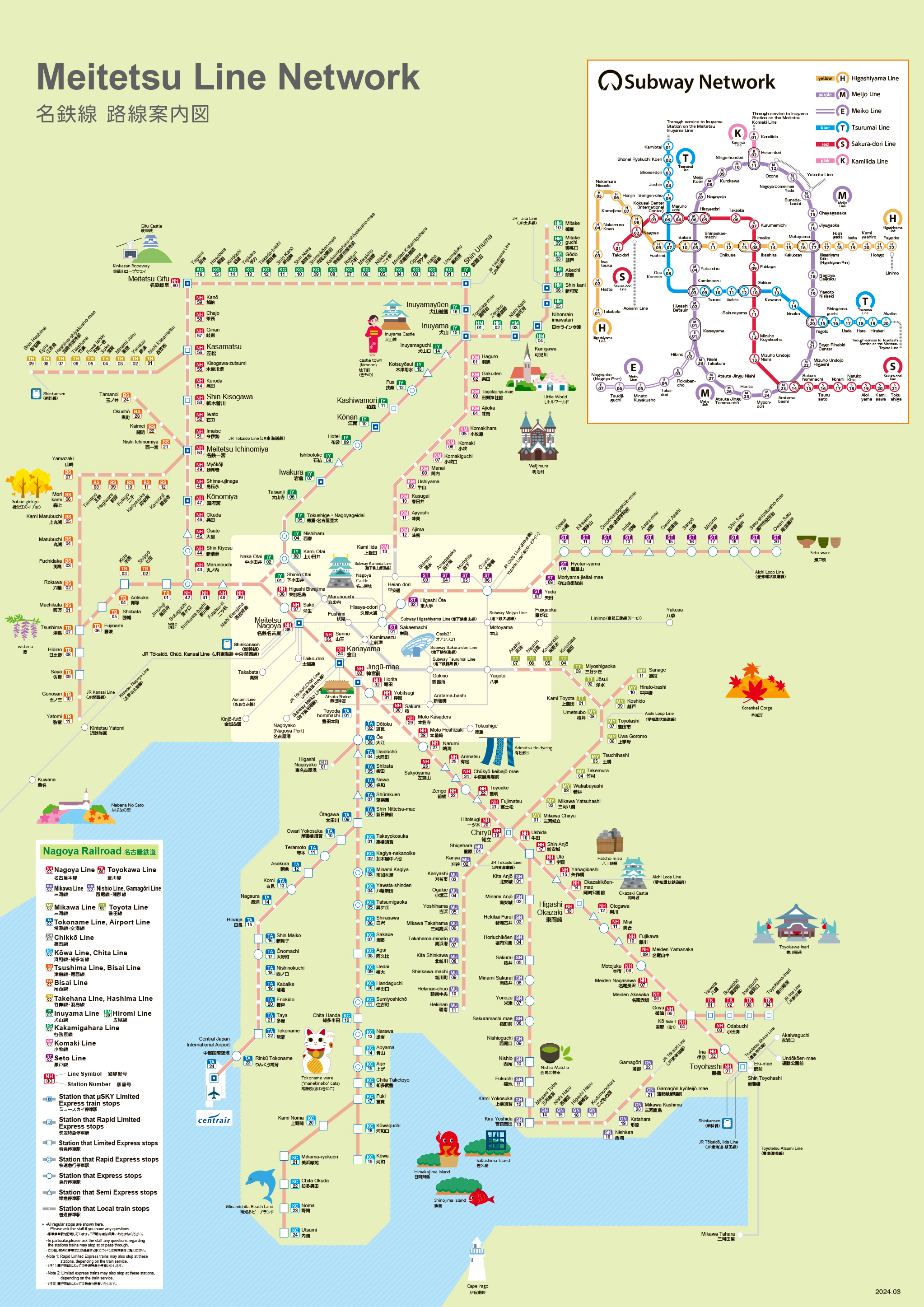
Credits: the narration and the Japanese in the video are AI voices. The quiz signs in the video are illustrations made for the video, not real station signs. Photos from Wikimedia Commons: "Sakae-STA Meijo-Line Name-sign.jpg", "Sakae-STA Platform3.jpg", "Sakae-STA Central-Gate.jpg" and "Sakae-STA Platform4.jpg" by MaedaAkihiko, CC0, cropped, text added / "Sakae, a subway station (157217462).jpg" by Yuya Tamai, CC BY 2.0, cropped, blurred background, text added (Sakae Station, Nagoya, 2006; signs may differ now).




Comments
Post a Comment